
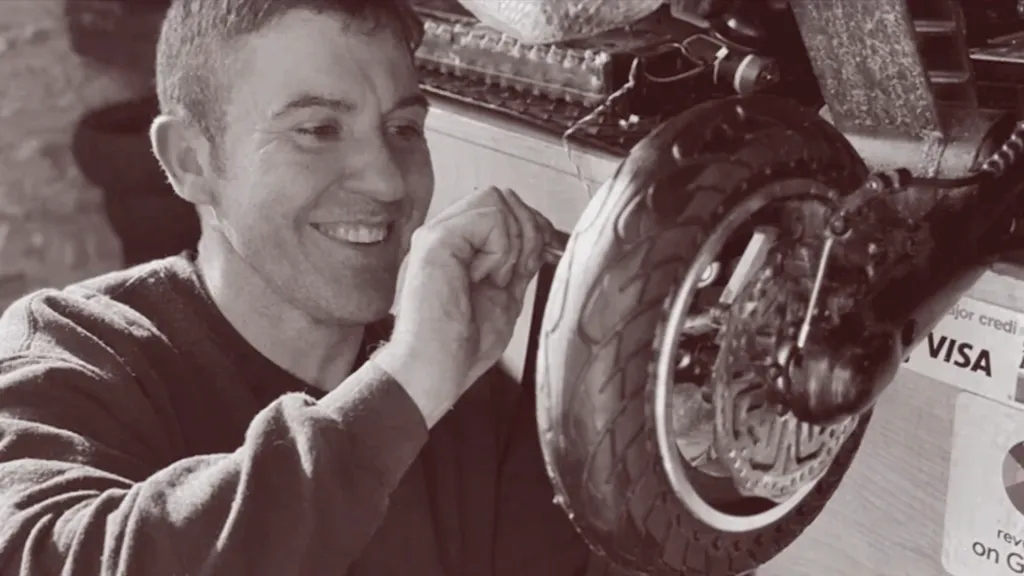

Ten to fifteen calls a day, and one pair of hands
Scoot City is a specialist repair workshop for e-scooters, e-bikes, folding bikes and quads. Pascual Soares started the business in 2019 selling micromobility online, then moved fully into repair. Customers travel from across the North West to the Manchester workshop, and he runs a call-out service within about 15 miles.
He has run it as a one-man band from the start: the repairs, the sales, the customer service, all of it. The phone was the pinch point. Ten to fifteen calls a day, two or three of them ringing out, and the ones he did answer were taken on speaker with a spanner in his hand and a customer stood in front of him waiting on a same-day puncture repair. “It's just a little bit unprofessional on my part,” he says, “but I was trying to do everything at once.”
Why he handed the phone over
Pascual found Cyberstaff through a search and signed up without much hesitation. He was not after a sales tool. He wanted the receptionist work out of his hands so he could concentrate on the technical side of the job, and the setup was, in his words, very straightforward.
The maths helped too. Putting someone on the payroll to answer the phone runs into tens of thousands a year once tax and national insurance are counted, for a person who still takes holidays and sick days. Set against the monthly cost of an AI Receptionist that never clocks off, Pascual's view was short: “It's a no-brainer, isn't it?”
Punctures one way, diagnostics the other
Most calls are repairs: punctures, faults, diagnostics, servicing. It sounds like a narrow band of enquiries, but the difference between them matters. Someone who just wants a tyre fixed should not be asked whether the scooter has been modified. Working with the Cyberstaff team, Pascual had advanced mapping put in place so each type of job gets its own line of questions. It was running the way he wanted within two or three days.
The AI Receptionist now takes the caller through the right questions, gives them the price, and asks them to send a video of the problem over WhatsApp. That is exactly how Pascual has always worked, so the handover is seamless. The number and the details are waiting for him, and he quotes from the video when he comes off a job. It also takes its time with callers who are harder to catch first time, and writes the detail down properly.
Two weeks in Spain, and about £1,000 a month
The test came early. Pascual went to Spain for a fortnight not long after going live, and for the first time in years he left the work phone alone. He listened back to a few calls in the evenings out of curiosity, and the questions were being asked exactly as he wanted them. “I wasn't even worried about having to pick up a call,” he says.
The commercial side is simpler. Two or three missed calls a day adds up to somewhere between 60 and 90 a month, and Pascual puts the value of recovering them at around £1,000 a month. Not one of the customers he has rung back has mentioned the AI or queried it. “The calls are being answered in a professional manner,” he says, “and I can go back at a time that suits me.”
 Rated Excellent on Trustpilot